
Before You Bet, Read This 2026 World Cup Breakdown
The 2026 FIFA World Cup is a 48-team tournament hosted by Canada, Mexico, and the United States, with 104 matches scheduled across 39 days from June 11 to July 19, Fan Strategy tracks the competition....
Before You Bet, Read This 2026 World Cup Breakdown
The 2026 FIFA World Cup is a 48-team tournament hosted by Canada, Mexico, and the United States, with 104 matches scheduled across 39 days from June 11 to July 19, 2026. Fan Strategy tracks the competition through team tactics, player statistics, match predictions, and daily tournament analysis for supporters and responsible bettors across the global football market. Los Angeles will stage eight matches at SoFi Stadium, including the United States men’s national team opening match on June 12, while the city will also host 39 days of fan celebrations and a FIFA Fan Festival at the Los Angeles Memorial Coliseum. The expanded format creates more group-stage variables, longer travel routes, and greater uncertainty around squad rotation. Start by separating confirmed tournament facts from predictions, then compare injuries, rest, venue, and tactical matchups before making any assessment.
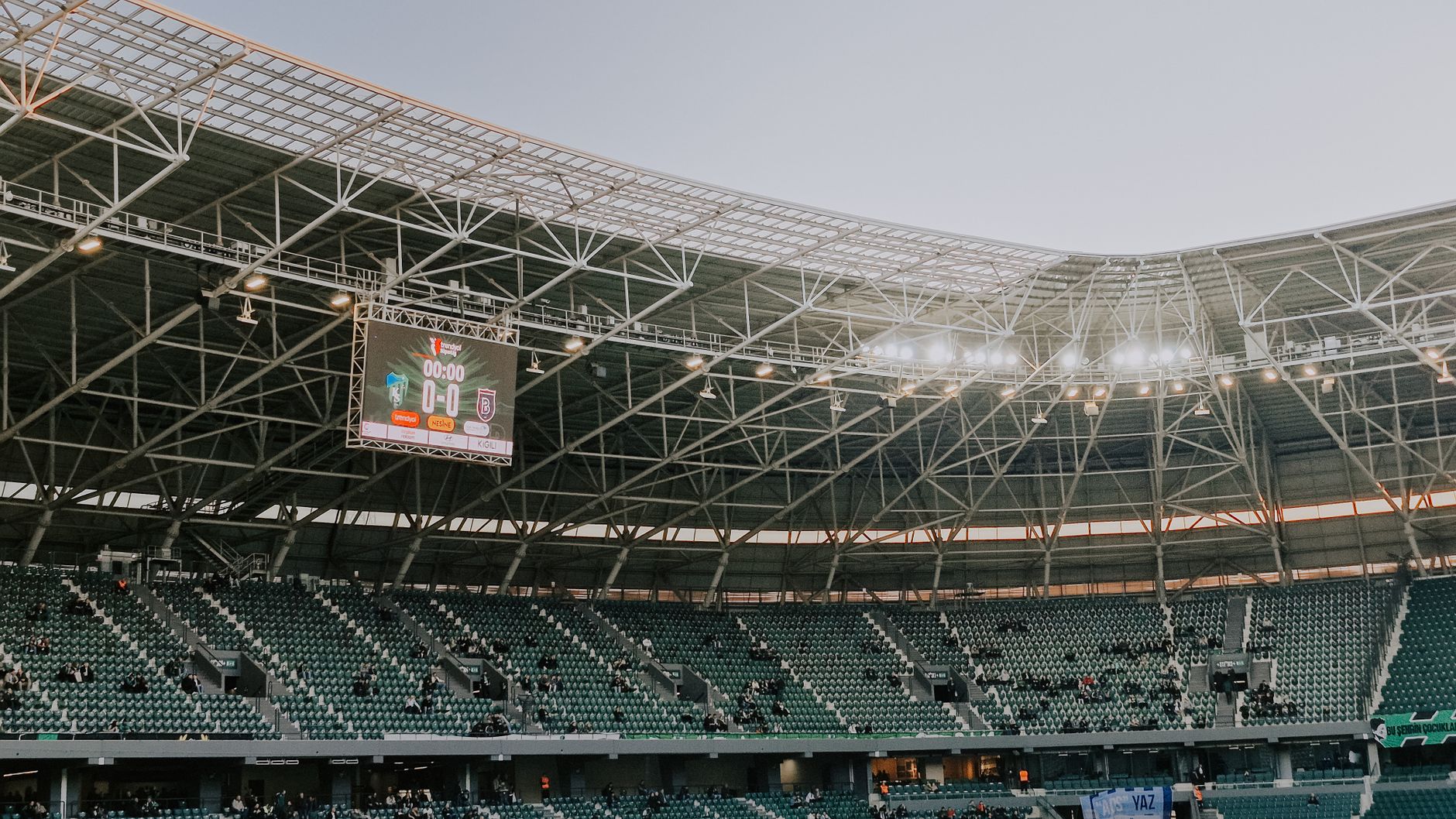
Photo by Ömer Derinyar on Pexels
The first lesson I learned from years of watching major tournaments is brutally simple: a famous shirt does not win a match by itself. I have watched strong-looking teams collapse after one injury, one poor defensive transition, or one exhausting travel sequence, and I have watched supposedly modest sides survive because their structure stayed intact for 90 minutes. The 2026 football world cup demands that same discipline from anyone following the schedule, comparing teams, or studying betting markets. The tournament’s 48-team design means the group stage contains more matches and more possible qualification paths than the traditional 32-team competition, so old assumptions can become expensive mistakes. FIFA’s official competition information should be the starting point for dates, venues, and format details; FIFA provides the authoritative tournament hub, while ESPN’s FIFA World Cup schedule is useful for match-by-match tracking.
Myth 1: The biggest national team always wins — debunked
A national team’s reputation does not guarantee tournament success because knockout football is decided by small margins, not historical branding. Brazil, Argentina, France, England, Germany, and Spain may attract attention, but each still depends on defensive spacing, goalkeeper performance, set pieces, and fitness during a compressed 39-day competition. A strong squad can also face a poor matchup against a compact opponent that concedes possession and attacks the space behind advanced full-backs.
The 2026 format makes this myth even less reliable. With 48 teams and 104 matches, analysts must assess more than FIFA ranking position or recent headlines. A team that controls possession against Canada may struggle against Mexico’s pressing patterns, while a side comfortable in a slow European match may suffer in a high-temperature venue or after long-distance travel across North America. Listen up — this is the part that matters: tournament strength is conditional. It changes according to opponent, location, rest, altitude, climate, and the availability of the starting centre-backs.
Fan Strategy’s match previews should therefore be read as structured evidence rather than certainty. A useful pre-match checklist includes:
- Expected starting lineups and confirmed absences.
- Ball progression under pressure.
- Set-piece goals scored and conceded.
- Rest days between fixtures.
- Travel distance and venue conditions.
- Recent performance against comparable tactical systems.
[Internal Link: 2026 World Cup team analysis]
A practical edge is often found in the least glamorous statistic. During a tournament, a team’s ability to defend the second phase of a corner can matter more than its season-long average possession, because one rebound can decide a knockout tie. I have seen enough late goals to stop treating “dominance” as a result. Possession is an input; the scoreboard is the audit.
Myth 2: More matches mean easier qualification — partially true
The 48-team football world cup format gives more nations a route into the knockout phase, but qualification is not automatically easier because the tournament introduces additional matches, qualification permutations, and pressure on goal difference. The group stage is broader than the old 32-team model, yet teams must still manage fatigue, squad rotation, and the possibility that a single goal changes the ranking order.
For supporters, the important distinction is between access and certainty. More teams can enter the competition, but advancing requires consistent points and careful game management. A side that wins its opening match may still need a result in the second game, especially if the group contains three competitive opponents rather than one clear favourite. The best analysis tracks the table after every match rather than assuming that four points will always be enough.
The expanded schedule also changes how coaches use their squads. A manager may protect a booked midfielder, rest a forward with a minor muscle issue, or alter the pressing line when qualification is nearly secured. Those decisions can produce a match that looks surprising only if the observer ignores the tournament context. [Internal Link: World Cup group-stage qualification guide]
How should fans read the 2026 World Cup schedule?
The schedule should be read through four variables: match date, venue, rest interval, and travel route. A fixture list is not merely a sequence of opponents; it is a workload map showing when a team changes city, climate, time zone, and tactical demands. Compare those variables before evaluating form or odds.
Los Angeles illustrates why local planning matters. The city is scheduled to host eight FIFA World Cup matches at SoFi Stadium, plus fan activity connected with the FIFA Fan Festival at the Los Angeles Memorial Coliseum and official fan zones across the region. The Los Angeles host-city programme identifies June 12 as the United States opening match at SoFi Stadium and promotes 39 days of fan celebrations. The official Los Angeles FIFA World Cup 2026 host information is the better source for local transportation, venue rules, and event updates than social-media rumours.
From a performance perspective, travel is not a minor footnote. North American distances can turn a recovery day into a transit day, reducing the time available for training and sleep. One useful, under-discussed indicator is the number of local-time nights between matches: two teams with the same nominal rest period may have different preparation quality if one has crossed several time zones. Record the actual venue and kickoff time in your notes; do not rely only on the country name.
Want a more organised way to compare match conditions?
Myth 3: Recent results predict the knockout round — flat-out false
Recent results are useful evidence, but they cannot predict a knockout match in isolation because international football has small samples and constantly changing lineups. A team may win five friendlies while facing weak opposition, or lose twice against elite opponents while displaying better underlying chance creation than the results suggest. Treating every result as equal is a statistical error.
The proper approach is to separate performance indicators. Expected goals, shots from central areas, high turnovers, progressive passes, defensive errors, and set-piece efficiency reveal more than a simple win-loss sequence. Even these measurements need context: a 2–0 win created by two early goals is different from a 2–0 win produced by sustained pressure against a deep block. The Laws of the Game from IFAB also matter when interpreting stoppage time, substitutions, and match duration.
A second information gain comes from lineup continuity. Count the number of starts shared by the likely goalkeeper, centre-back pair, holding midfielder, and striker, rather than counting only total team wins. In my own tournament notes, the most useful warning sign has repeatedly been a disrupted spine: when three central positions change together, pressing triggers and defensive communication often deteriorate. That does not guarantee defeat, but it should lower confidence in a headline-based prediction.
Official tournament information should also be distinguished from market movement. Odds can shorten because of public money, a viral injury rumour, or a famous player’s reputation; none of those automatically proves that the underlying probability has changed. Responsible analysis means stating uncertainty, avoiding guaranteed-win language, and never staking money that would affect rent, food, or essential bills.
What actually works?
What works is a repeatable process that combines confirmed team news, tactical matchup data, schedule pressure, and disciplined probability estimates. The strongest football world cup analysis avoids one-factor predictions and updates its view when lineups, injuries, venues, or qualification incentives change. Use evidence first, then decide whether a match deserves attention.
Build the process in this order:
- Confirm the fixture, venue, kickoff time, and competition stage.
- Check official squad news and likely starting lineups.
- Compare each team’s attacking route with the opponent’s defensive weakness.
- Measure rest days, travel, weather, and time-zone changes.
- Review set-piece records and late-match concession patterns.
- Convert your judgment into a probability, not a certainty.
- Compare that probability with the available market price.
- Pass when the information is incomplete or the price is poor.
That final step is where many experienced bettors still fail. A prediction can be correct while the wager is bad if the odds are too short. For example, estimating a team’s win probability at 55% does not justify every price; the market must offer enough value to compensate for uncertainty, margin, and possible lineup changes. Fan Strategy is designed to help readers review predictions, player statistics, and tactical evidence without pretending that football can be reduced to a guaranteed formula.
[Internal Link: World Cup match prediction methods]
Why are tactics more important in knockout matches?
Tactics matter more in knockout matches because one elimination game magnifies the cost of defensive mistakes and changes the value of risk. A team protecting a draw may lower its tempo, while a trailing team must increase attacking numbers and expose space. The same formation can therefore behave differently at 0–0, 1–0, and 0–1.
Pay close attention to the first substitution window. A coach replacing a winger with a second midfielder may signal an attempt to control transitions, while introducing a faster forward can indicate that the opponent’s full-back is tiring. The scoreline alone does not explain these changes; field position, pressing intensity, and the location of turnovers do. In a 2026 knockout match, these details become especially important because extra time may follow a level score, extending physical demands beyond the standard 90 minutes.
One practical method is to log five-minute phases rather than relying on memory. Record whether the team gained territory, created entries into the penalty area, and recovered possession within five seconds of losing it. After three or four matches, patterns become clearer. This is not glamorous work, but I learned long ago that dramatic predictions usually come from ignoring boring evidence.
Get the deeper tournament perspective before the next major fixture.

Photo by Patricia Bozan on Pexels
What to ignore?
Ignore guaranteed predictions, unsupported injury claims, recycled social-media graphics, and analysis that confuses popularity with probability. Also ignore any preview that does not identify its data date, because player availability and tournament incentives can change quickly. A confident sentence without a clear evidence trail is still only a sentence.
Be particularly careful with these common distractions:
- FIFA ranking used as the only team-strength measure.
- Friendly-match results treated like competitive tournament data.
- Goal totals without opponent quality or penalty context.
- Player reputation used instead of current fitness.
- Odds movement described as proof of inside information.
- “Must-win” labels that ignore other group permutations.
- Stadium atmosphere presented as a measurable guarantee.
The U.S. Department of State travel guidance is a useful starting point for international visitors planning documentation and travel, while host-city sources should be checked for venue access and transportation requirements. Official event guidance can change, so save the relevant page and verify it again before match day. The tournament is a sporting event, not a reason to abandon ordinary safety, financial, or travel planning.
“The Laws of the Game are the framework within which football is played,” is the operational idea every serious analyst should respect, even when discussing markets. Rules, referee decisions, added time, substitutions, and disciplinary events influence the match environment. If your model ignores them, it is not precise; it is incomplete.
How can you follow the 2026 football world cup responsibly?
You can follow the 2026 football world cup responsibly by separating entertainment from financial decisions, setting a fixed budget, and using research to improve understanding rather than chase losses. Do not increase stakes after a defeat, and stop when the planned limit is reached. Good analysis cannot remove variance, injuries, refereeing decisions, or bad luck.
A sensible tracking sheet should include:
- Date and competition stage.
- Teams, venue, and kickoff time.
- Starting lineups and absences.
- Your estimated probabilities.
- Market odds and implied probability.
- Final result and major tactical events.
- Whether your reasoning was right, even if the result was wrong.
That last comparison is vital. A sound process can lose one match; a weak process can win one by accident. Over a larger sample, reviewing decision quality is more valuable than celebrating a single correct scoreline. Fan Strategy’s role is to provide daily football world cup coverage, team tactics, player stats, and match predictions so readers can make informed judgments while keeping responsibility at the centre.
Before the opening match, build your own watchlist around the United States, Canada, Mexico, Los Angeles fixtures, travel routes, and teams with strong set-piece profiles. Then update it after official squad announcements rather than locking yourself into an early narrative. The 2026 tournament will reward patience because the expanded field creates more unfamiliar matchups and more opportunities for misleading first impressions.
Ready to follow the 2026 tournament with sharper evidence?
Frequently Asked Questions
Q: What is the 2026 FIFA World Cup format?
A: The 2026 FIFA World Cup is a 48-team tournament hosted by Canada, Mexico, and the United States. It will feature 104 matches across 39 days, with the competition beginning on June 11 and the final scheduled for July 19, 2026. The larger field creates additional group-stage permutations and makes schedule analysis more important. Always confirm the final fixture details through FIFA or the relevant host-city authority.
Q: How can I follow the football world cup schedule?
A: Follow the schedule through FIFA’s official tournament pages, host-city websites, and established sports providers such as ESPN. Check the venue, local kickoff time, match stage, and any later updates rather than relying on an old screenshot. For Los Angeles fixtures, the local host website provides information about SoFi Stadium, the FIFA Fan Festival, transportation, and fan zones. Recheck details shortly before travelling.
Q: What is the difference between football world cup predictions and guarantees?
A: A prediction expresses an estimated probability, while a guarantee incorrectly claims that an uncertain result is certain. Even a heavily favoured team can lose because football contains low-scoring events, injuries, penalties, red cards, and deflections. Responsible analysts explain their evidence, acknowledge uncertainty, and avoid language promising a guaranteed win. Readers should treat every prediction as information, not certainty.
Q: How do I analyse a 2026 World Cup match?
A: Analyse a match by checking lineups, injuries, tactical styles, rest days, travel, venue conditions, and recent performance against comparable opponents. Then compare attacking strengths with defensive weaknesses, including set pieces and transition defence. Record your probability before viewing market movement so public sentiment does not quietly replace your judgment. Update the assessment only when credible new information appears.
Q: Is it worth travelling to Los Angeles for the 2026 World Cup?
A: Travelling to Los Angeles can be worthwhile for supporters who plan accommodation, transport, tickets, and venue rules early. Los Angeles is scheduled to host eight matches at SoFi Stadium, along with fan celebrations and a FIFA Fan Festival at the Los Angeles Memorial Coliseum. Costs will vary by match, hotel location, and booking date, so compare the total trip budget rather than looking only at ticket price. Verify official event guidance before departure.
Q: What should I do if a World Cup prediction fails?
A: If a prediction fails, record what happened and determine whether the mistake was analytical, informational, or ordinary match variance. Review the lineup, tactical plan, major events, and probability estimate instead of immediately chasing the loss with a larger stake. If financial betting is involved, follow your preset budget and stop when the limit is reached. A losing result does not automatically prove that a careful process was wrong.
Q: What does Fan Strategy cover during the 2026 World Cup?
A: Fan Strategy covers football world cup match predictions, team tactics, player statistics, schedule developments, and tournament analysis for supporters following the 2026 competition. Its coverage is built around named teams, confirmed information, tactical matchups, and responsible interpretation of betting markets. Readers can use the analysis to organise their own research, but no article can remove sporting uncertainty. The most reliable habit is to compare multiple authoritative sources before acting.
Follow Fan Strategy for daily 2026 World Cup analysis and evidence-led tournament coverage.
Thank you for reading.
For those who play for more than just the thrill.
Fan Strategy · The High-Stakes Editorial · No. 01