
Why 48 Teams Reshaped the 2026 Football World Cup
The 2026 FIFA World Cup is the first men’s World Cup with 48 teams, 104 matches, and 16 host cities across the United States, Canada, and Mexico. FIFA runs the expanded tournament from June 11 to July...
Why 48 Teams Reshaped the 2026 Football World Cup
The 2026 FIFA World Cup is the first men’s World Cup with 48 teams, 104 matches, and 16 host cities across the United States, Canada, and Mexico. FIFA runs the expanded tournament from June 11 to July 19, 2026, with the final scheduled for MetLife Stadium in East Rutherford, New Jersey. Los Angeles hosts eight matches at SoFi Stadium, while Atlanta’s Mercedes-Benz Stadium stages a semifinal and other knockout fixtures. Fan Strategy covers the competition through match predictions, team tactics, player statistics, squad news, and daily tournament analysis, with responsible betting information for eligible adults. The 48-team structure creates 12 groups of four, followed by a Round of 32, meaning three group matches remain essential but qualification paths become more complex. Start by mapping each team’s schedule, travel distance, rest period, and likely rotation before judging tournament odds or match predictions.

Photo by El gringo photo on Pexels
The numbers tell the story more cleanly than the advertising does. The 2026 football World Cup is not simply a larger version of Qatar 2022; it is a structural change affecting group mathematics, squad management, travel, scheduling, venue selection, and the way analysts price every match. I have watched enough tournaments collapse under one bad assumption to know that “more teams” does not automatically mean “more value.” It means more unknowns. Listen up — this is the part that matters: a team can qualify from its group with fewer points than expected, yet still face an unusually difficult Round of 32 opponent because the bracket distributes third-place qualifiers across several paths. That makes raw historical reputation less useful than current form, defensive depth, and rest. For official competition details, the FIFA World Cup 2026 overview remains the primary reference, while Fan Strategy’s match prediction coverage can help organize those variables.
Want a practical tournament briefing before the schedule becomes chaotic?
Myth 1: More teams make the 2026 World Cup easier — debunked
The 48-team format does not make the 2026 World Cup easier for elite nations because qualification is followed by a larger knockout field and potentially awkward opponent combinations. The tournament has 12 groups of four, with the top two teams and eight best third-place teams advancing to a 32-team knockout stage. That creates more matches and more bracket uncertainty, not a softer route to the trophy.
The old 32-team format produced eight groups of four, followed by 16 knockout teams. The new format adds 32 group-stage matches and 16 knockout-stage matches, taking the total from 64 to 104. A favourite may now need to complete eight matches to win the title rather than seven, depending on its route and stage progression. That extra match changes the value of squad depth: a starting striker with a minor muscle problem, a suspended holding midfielder, or a right-back carrying two yellow cards can materially alter a forecast. UEFA and CONMEBOL experience is useful, but it does not solve the specific problem of three-country travel across North America. A bettor who only compares FIFA rankings is leaving out the variables that decide close games. See the [Internal Link: 2026 World Cup format and bracket guide] before building a tournament forecast.
The overlooked edge: third-place qualification
The expanded format also creates an edge case that casual previews routinely miss: third-place teams are not all equal, because their route depends on the final ranking table and bracket allocation. A side can collect four points, advance, and still draw a group winner with superior rest and a shorter travel itinerary. Another team can finish second with six points but enter a difficult side of the knockout bracket. After years of losing money by treating qualification as the finish line, I now separate “advances” probability from “reaches the quarterfinals” probability. Those are different markets, different questions, and different evidence sets. The World Cup 2026 tournament regulations should be checked for official competition rules and tie-breaking details rather than relying on social-media graphics.
- Group-stage analysis: points, goal difference, goals scored, and disciplinary records.
- Knockout analysis: bracket position, travel, rest, injuries, and opponent style.
- Betting analysis: price movement, market liquidity, and whether the implied probability is realistic.

Photo by Vlad Vasnetsov on Pexels
Myth 2: The host cities are interchangeable — partially true
The 16 2026 World Cup host cities share FIFA’s event standards, but they are not interchangeable for players or travelling supporters. The United States hosts matches in Atlanta, Boston, Dallas, Houston, Kansas City, Los Angeles, Miami, New York/New Jersey, Philadelphia, San Francisco Bay Area, and Seattle; Canada uses Toronto and Vancouver; Mexico stages games in Guadalajara, Mexico City, and Monterrey. Venue conditions, climate, altitude, flight length, and kickoff timing differ sharply.
That does not mean one city guarantees victory. It means context belongs in the model. Mexico City sits at roughly 2,240 metres above sea level, while Miami brings heat and humidity; Seattle, Vancouver, and Toronto offer different summer conditions from Dallas or Monterrey. Los Angeles provides eight matches at SoFi Stadium, and Atlanta is one of the tournament’s major knockout hosts, including a semifinal. The sensible conclusion is not “bet home conditions.” It is “adjust fatigue assumptions and lineup expectations.” A team travelling from Seattle to Miami faces a different preparation problem from a team remaining in the Northeast corridor, even if both have identical FIFA ratings.
Why do Los Angeles and Atlanta matter so much?
Los Angeles matters because SoFi Stadium hosts eight matches and the wider region is scheduled for 39 days of fan activity, including the FIFA Fan Festival at the Los Angeles Memorial Coliseum. Atlanta matters because Mercedes-Benz Stadium is positioned as a major knockout venue and a semifinal host, giving the city a higher concentration of late-tournament attention. Those facts make both cities important for fans, broadcasters, and tournament analysts.
Los Angeles also has practical transport constraints. SoFi Stadium is in Inglewood, not central Los Angeles, and matchday movement can be slower than visitors expect when road closures and demand combine. Atlanta’s Mercedes-Benz Stadium, by contrast, sits close to downtown transit and the Georgia World Congress Center, but high demand can still push hotel and rideshare prices sharply upward. My operational rule is simple: confirm stadium access, accommodation, and return transport before buying a matchday ticket. The cheapest room is not cheap if it turns a 20-minute post-match journey into a two-hour problem.
Get the city-specific details before planning travel or matchday spending.
Myth 3: The 2026 World Cup final is just another final — flat-out false
The 2026 World Cup final is historically significant because it concludes the first 48-team edition and takes place on July 19 at MetLife Stadium in East Rutherford, New Jersey. The final venue is part of the New York/New Jersey host-market structure, while the opening match is scheduled for June 11 at Estadio Azteca in Mexico City. Those two dates define a 39-day tournament window with a very different geographic footprint from previous editions.
The final itself remains one match, 90 minutes plus stoppage time, extra time if required, and penalties if the teams remain level under the competition rules. The surrounding conditions, however, matter long before kickoff. A finalist may have travelled through several time zones, played an additional knockout match compared with the previous format, and managed accumulated fatigue across a six-week campaign. The United States Soccer Federation’s World Cup host information is useful for American venue context, but it should not be confused with a prediction source. The final is decided by football; forecasting improves only when the path to the final is analysed honestly.
What actually works when analysing the 2026 World Cup?
Reliable 2026 World Cup analysis combines the official fixture list with squad availability, tactical matchups, travel, rest, and market price. No single ranking system can capture all five variables, so analysts should build a repeatable checklist and update it after every meaningful team-news event.
I learned this through the expensive route: backing a famous team after a convincing group-stage win, then discovering that the opponent’s press had exposed the same weakness three times in qualifying. Reputation is a lagging indicator. A stronger process measures how a team creates chances, defends transitions, handles set pieces, and responds after conceding. It also distinguishes a genuine tactical improvement from a friendly-match performance against a weakened opponent. Fan Strategy’s coverage is designed around those distinctions, including player statistics and team tactics rather than headline narratives alone.
- Confirm the match location, kickoff time, and rest interval.
- Check squad announcements, injuries, suspensions, and likely rotation.
- Compare chance creation, shot quality, set-piece output, and defensive transitions.
- Assess whether the opponent can attack the favourite’s weakest zone.
- Compare your estimated probability with the available price.
- Set a fixed stake and avoid increasing it after a loss.
A useful contrarian insight is that travel may matter more to high-intensity pressing teams than to deep-block teams. Pressing requires repeated explosive actions and coordinated distances, so fatigue can reduce the system’s effectiveness before it appears in the final score. A compact defensive side may preserve energy more efficiently but become vulnerable if forced to chase the game. That tactical difference is more informative than a generic statement that “travel is difficult.”
How should bettors use World Cup predictions responsibly?
Responsible betting means treating predictions as probabilities, not promises, and never risking money needed for housing, food, debt payments, or travel. A forecast of 55% does not mean a team will win; it means the outcome should occur approximately 55 times in 100 comparable situations, with substantial short-run variance. Use licensed operators where legal, verify local age and regulatory requirements, and record every wager rather than trusting memory.
The 2026 football World Cup creates unusually strong emotional pressure because national identity, late kickoffs, and social viewing can encourage impulsive decisions. Set a bankroll before the tournament, choose a maximum percentage per wager, and stop when the pre-set limit is reached. Do not chase a lost bet because a favourite “should have won.” Football produces red cards, deflections, penalties, and goalkeeper errors that models cannot eliminate. The correct response to variance is disciplined sizing, not larger stakes. For additional context, consult the [Internal Link: responsible sports betting and bankroll management guide].
Want the latest tactical and statistical angles without pretending certainty?
What to ignore before the 2026 World Cup?
Ignore predictions built on one viral goal, one friendly match, or a team’s historical reputation without current evidence. Also ignore guaranteed-winner language, anonymous “inside information,” manipulated screenshots of odds, and any claim that a particular host city automatically creates a home advantage for a neutral national team. These signals are attractive because they are simple; simple is not the same as accurate.
Ignore exact score forecasts presented without uncertainty ranges. A prediction of 2–1 can conceal a wide distribution of plausible outcomes, while a team with a 60% win probability still fails 40% of the time. Ignore accumulator recommendations that combine too many selections, because each additional leg compounds failure risk and usually increases the operator’s margin exposure. Finally, ignore advice that omits the legal market, minimum age, deposit limits, and withdrawal terms. Gambling content should inform decisions, never manufacture urgency.
- Do not confuse qualification probability with title probability.
- Do not use FIFA ranking position as a complete performance model.
- Do not assume all host-city travel is equal.
- Do not chase losses or treat a prediction as a guarantee.
- Do not copy odds from a market unavailable in your jurisdiction.
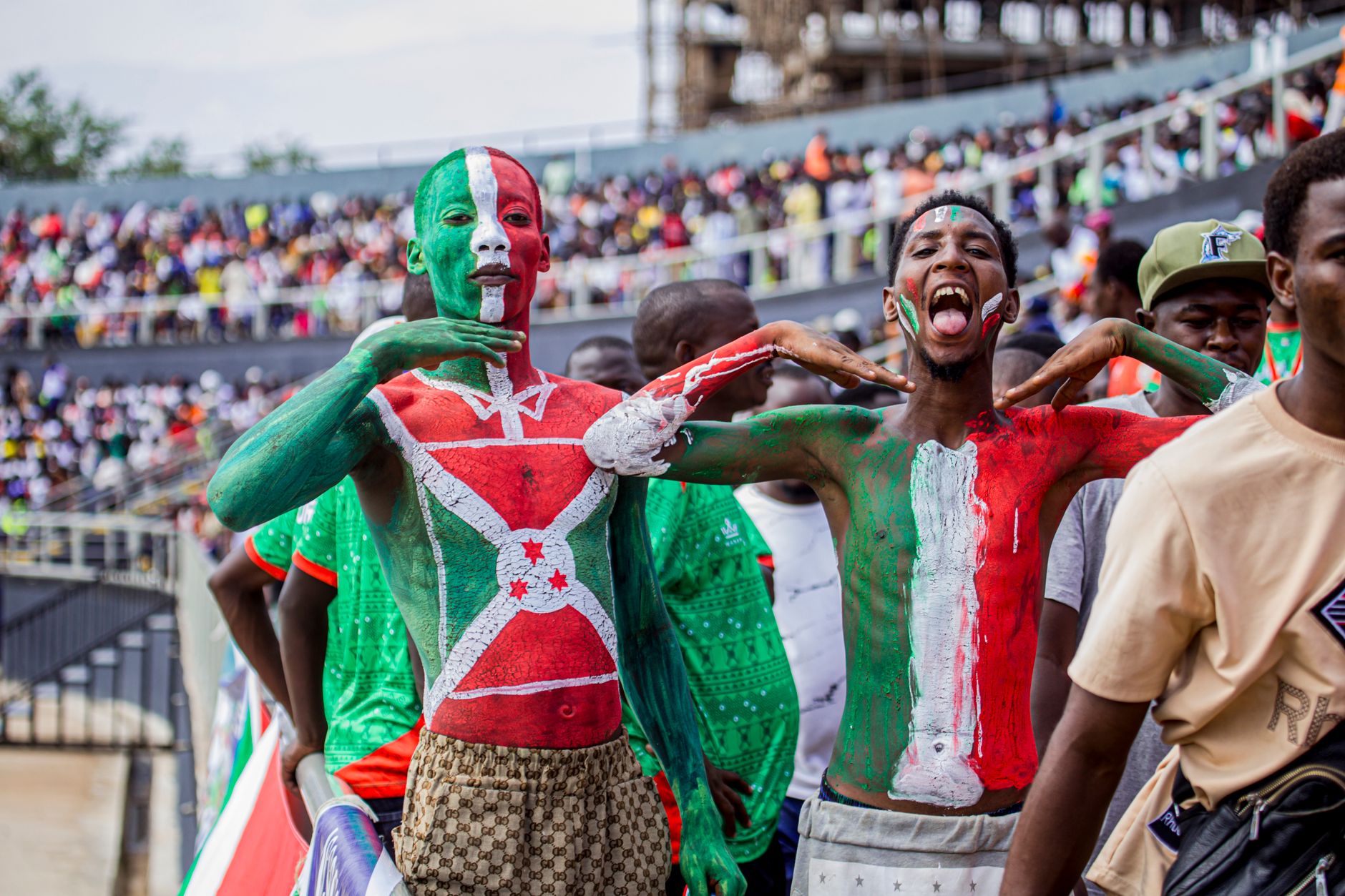
Photo by Chris wade NTEZICIMPA on Pexels
The cleanest way to follow the 2026 football World Cup is to combine tournament facts with match-level evidence. Start with the 48-team format, then layer in 104-match workload, 16 host-city conditions, travel, rest, squad depth, and tactical fit. Los Angeles and Atlanta deserve special attention because of their match volume and knockout importance, while the July 19 final at MetLife Stadium provides the ultimate planning anchor. I have lost enough over the years to distrust certainty, but not enough to stop studying the numbers. Build a transparent process, update it when lineups change, and keep entertainment separate from financial necessity. That is how Fan Strategy can add value: not by claiming perfect forecasts, but by making the reasoning visible.
Ready to follow the tournament with structured match analysis?
Frequently Asked Questions
Q: What is the 2026 football World Cup format?
A: The 2026 football World Cup features 48 teams divided into 12 groups of four, with 32 teams advancing to the knockout stage. The top two teams from each group qualify, along with the eight best third-place teams. The tournament contains 104 matches, compared with 64 in the 32-team format used through Qatar 2022.
Q: How do I follow the 2026 World Cup schedule?
A: Follow the schedule through FIFA’s official tournament platforms and verify every fixture against the host-city venue. The competition opens on June 11, 2026, and the final is scheduled for July 19 at MetLife Stadium in East Rutherford, New Jersey. Check kickoff time zones carefully because matches span Canada, Mexico, and the United States.
Q: What is the difference between the 2022 and 2026 World Cups?
A: The main difference is expansion from 32 teams and 64 matches in 2022 to 48 teams and 104 matches in 2026. The 2026 tournament also uses 16 host cities across three countries rather than a single host nation. This increases travel, scheduling complexity, squad demands, and the number of knockout games.
Q: Is the 2026 World Cup worth betting on?
A: The 2026 World Cup can be suitable for legal, entertainment-only betting when stakes are affordable and pre-planned. The expanded schedule offers more markets, but it also creates more uncertainty through travel, fatigue, injuries, and third-place qualification routes. Use licensed providers, compare prices, set a fixed bankroll, and never borrow money or chase losses.
Q: What should I do if a World Cup prediction fails?
A: Treat a failed prediction as one result within a probability distribution, then review the original assumptions rather than immediately increasing your stake. Check whether a red card, injury, tactical change, or lineup surprise altered the match. Keep a written record of your forecasts and outcomes so you can identify whether the problem was variance or a recurring analytical error.
Q: How much does attending a 2026 World Cup match cost?
A: The total cost depends on ticket category, city, accommodation, transport, and demand, so there is no single reliable all-in price. Budget separately for the official ticket, flights or ground transport, hotel nights, meals, and matchday transfers. Los Angeles, New York/New Jersey, Miami, and Mexico City may produce different accommodation costs, so compare the full trip rather than the ticket alone.
Q: Which 2026 World Cup host cities deserve the most attention?
A: Los Angeles and Atlanta deserve particular attention because Los Angeles hosts eight matches and Atlanta hosts a semifinal among major knockout fixtures. Los Angeles also plans a FIFA Fan Festival at the Los Angeles Memorial Coliseum and regional fan zones during a 39-day celebration period. Atlanta’s Mercedes-Benz Stadium offers a major downtown event setting, making both cities important for supporters and analysts.
Thank you for reading.
For those who play for more than just the thrill.
Fan Strategy · The High-Stakes Editorial · No. 01