
Why Top 3 World Cup 2026 Football Picks Shift
Argentina, France, and Brazil currently form the strongest three-team starting point for World Cup 2026 football analysis, but the tournament’s 48-team format makes certainty dangerous. Argentina are....
Why Top 3 World Cup 2026 Football Picks Shift
Argentina, France, and Brazil currently form the strongest three-team starting point for World Cup 2026 football analysis, but the tournament’s 48-team format makes certainty dangerous. Argentina are defending champions after Qatar 2022, France reached the 2022 final, and Brazil remain historically dominant with five FIFA World Cup titles. The 2026 competition will be hosted by Canada, Mexico, and the United States from June 11 to July 19, with 104 matches across 16 host cities. Fan Strategy ranks Argentina first overall for tournament control, France second for squad depth, and Brazil third for attacking value. The most important practical takeaway is simple: compare confirmed squads, qualifying form, travel demands, and match locations before trusting any early prediction, and treat betting opinions as analysis rather than guaranteed outcomes.

Photo by Walter Medina Foto on Pexels
Argentina’s position at the top is not based only on Lionel Messi’s legacy or the emotional weight of Qatar 2022. The data case is stronger: Lionel Scaloni’s team combined controlled possession, compact defensive spacing, and high-value transition attacks throughout its championship campaign. Argentina also understands knockout pressure better than almost any rival currently under consideration, although that advantage can weaken if key veterans lose pace or availability before June 2026. Listen up — this is the part that matters: historical reputation is not a predictive model, and even a defending champion can be exposed by injuries, heat, travel, or a single poor penalty shootout. Fan Strategy tracks those variables through match predictions, team tactics, and player statistics rather than relying on shirt sales or social-media momentum. If you are following the tournament seriously, build your own probability view from recent evidence, not nostalgia.
Want the daily tournament picture in one place?
[Internal Link: World Cup 2026 match prediction guide]
The Top 3 World Cup 2026 Football Picks at a Glance
The three leading teams differ by profile rather than quality alone: Argentina offer the best tournament-control case, France provide the broadest elite depth, and Brazil supply the most explosive attacking ceiling. Those distinctions matter because the 2026 World Cup expands from 32 to 48 teams, creating a group stage with 12 groups of four and a Round of 32. The format increases the number of matches required to win the trophy from 64 in 2022 to 104 in 2026, according to FIFA’s official competition information. A team that looks strongest over 90 minutes may still fail if rotation, recovery, and travel management collapse across seven knockout matches.
- Argentina — best overall: Defending champions with proven knockout control and a mature tactical structure.
- France — best for squad depth: Multiple high-level options in attack, midfield, and defense.
- Brazil — best value: Elite attacking talent creates upside if defensive balance improves.
A useful warning comes from tournament history. Spain dominated possession before winning South Africa 2010, Germany combined pressing and technical control in Brazil 2014, and Argentina survived several difficult moments in Qatar 2022. No champion followed one identical tactical script. According to FIFA’s World Cup history archive, Brazil’s five titles remain the benchmark, but past trophies do not automatically translate into 2026 performance. A second information gain is venue geography: the opening match in Mexico City and the final in New York/New Jersey represent different climate, altitude, and travel problems, so a prediction that ignores location is incomplete.
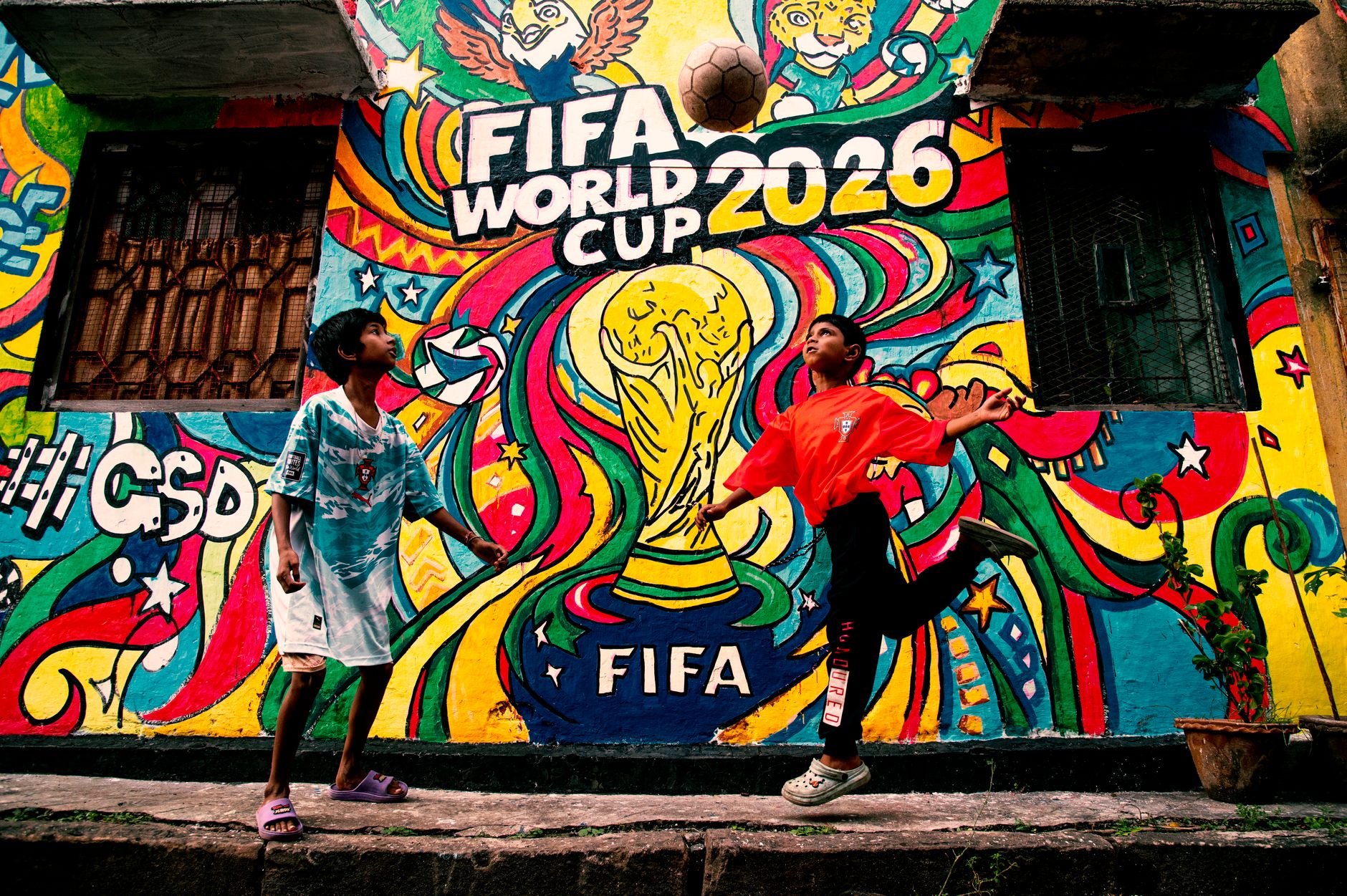
Photo by Anirban Das on Pexels
#1 Argentina: Best Overall World Cup 2026 Football Pick
Argentina rank first because their competitive advantage is structural: midfield control, defensive patience, set-piece quality, and knockout experience combine more reliably than one isolated attacking statistic. Lionel Scaloni’s side has already demonstrated that it can change tempo, defend a lead, and recover psychologically after conceding. That profile is valuable in a 48-team tournament, where the group stage may include mismatched opponents but the elimination rounds can compress into high-pressure matches every few days. Argentina’s central question is not whether they can play attractive football; it is whether the next generation can maintain the standards established by Lionel Messi, Ángel Di María, and Emiliano Martínez. Fan Strategy therefore monitors player minutes, age curves, injury reports, and replacement quality before adjusting Argentina’s rating.
From a tactical standpoint, Argentina are strongest when their midfield creates short passing lanes and their forwards attack the space after the first defensive line is drawn forward. Rodrigo De Paul’s work rate, Enzo Fernández’s distribution, and Alexis Mac Allister’s positional intelligence give the team several methods of progressing the ball, while Martínez remains a major factor in penalty situations. However, the team’s risk rises when full-backs advance simultaneously and the midfield cannot stop counterattacks immediately after possession is lost. That is a specific edge case many generic previews miss: Argentina may dominate the ball yet become vulnerable during the five seconds after a failed attack. My own lesson from years of losing predictions is blunt—never confuse possession percentage with defensive control. Track where possession is lost, not merely how much is held.
For more context, compare the team’s structure with our [Internal Link: Argentina tactical profile and player-stat analysis].
#2 France: Best for Squad Depth
France are the best World Cup 2026 option for squad depth because Didier Deschamps has repeatedly built teams capable of absorbing injuries, suspensions, and tactical changes without losing elite athleticism. Kylian Mbappé gives France acceleration and finishing, while players such as Aurélien Tchouaméni, Eduardo Camavinga, William Saliba, Theo Hernández, and Ousmane Dembélé represent depth across multiple phases. Their 2018 title and 2022 final appearance show sustained tournament relevance, although past results should be treated as supporting evidence rather than proof of another final. France’s greatest advantage may emerge late in matches, when substitutes can maintain pressing intensity against tired opponents.
The weakness is equally measurable. France can become overly dependent on Mbappé’s ability to create separation, especially when opponents defend with a deep block and deny central combinations. The midfield must also protect transitions after turnovers, because the expanded tournament schedule increases the importance of recovery and rotation. In a competition involving Canada, Mexico, and the United States, travel distances can exceed the compact movement patterns seen at Qatar 2022. “The 2026 World Cup will be the biggest FIFA World Cup ever,” FIFA states in its tournament overview, and that scale changes squad-depth calculations. France’s rating should rise when reserve midfielders and defenders are healthy; it should fall if the team loses two high-minute starters before the knockout phase.
Get the sharper squad and tactical breakdown before the major fixtures arrive.
#3 Brazil: Best Value
Brazil rank third and offer the strongest value case because their attacking ceiling remains extraordinary, even though their overall tournament reliability trails Argentina and France. Brazil have won five World Cups, including Sweden 1958, Chile 1962, Mexico 1970, United States 1994, and South Korea-Japan 2002. That record establishes a genuine football culture and talent pipeline, but it does not erase the defensive and organizational questions that have affected recent major tournaments. Vinícius Júnior, Rodrygo, and other emerging Brazilian attackers can create one-on-one advantages that change a match in seconds, making Brazil dangerous even when their underlying performance is uneven.
The contrarian point is that Brazil’s best route to the trophy may require less artistic freedom, not more. A balanced midfield screen, disciplined full-back positioning, and faster counter-pressing could make the team more difficult to break without reducing its attacking threat. Brazil also faces a geographic factor that casual previews overlook: matches across the United States, Mexico, and Canada may impose different travel and climate demands than a single-country tournament. A squad built for warm-weather explosiveness may not respond identically to every venue. For a prediction model, separate Brazil’s chance creation from its chance prevention; a team can rank first in attacking expected goals and still be a poor outright selection if defensive concessions remain excessive.
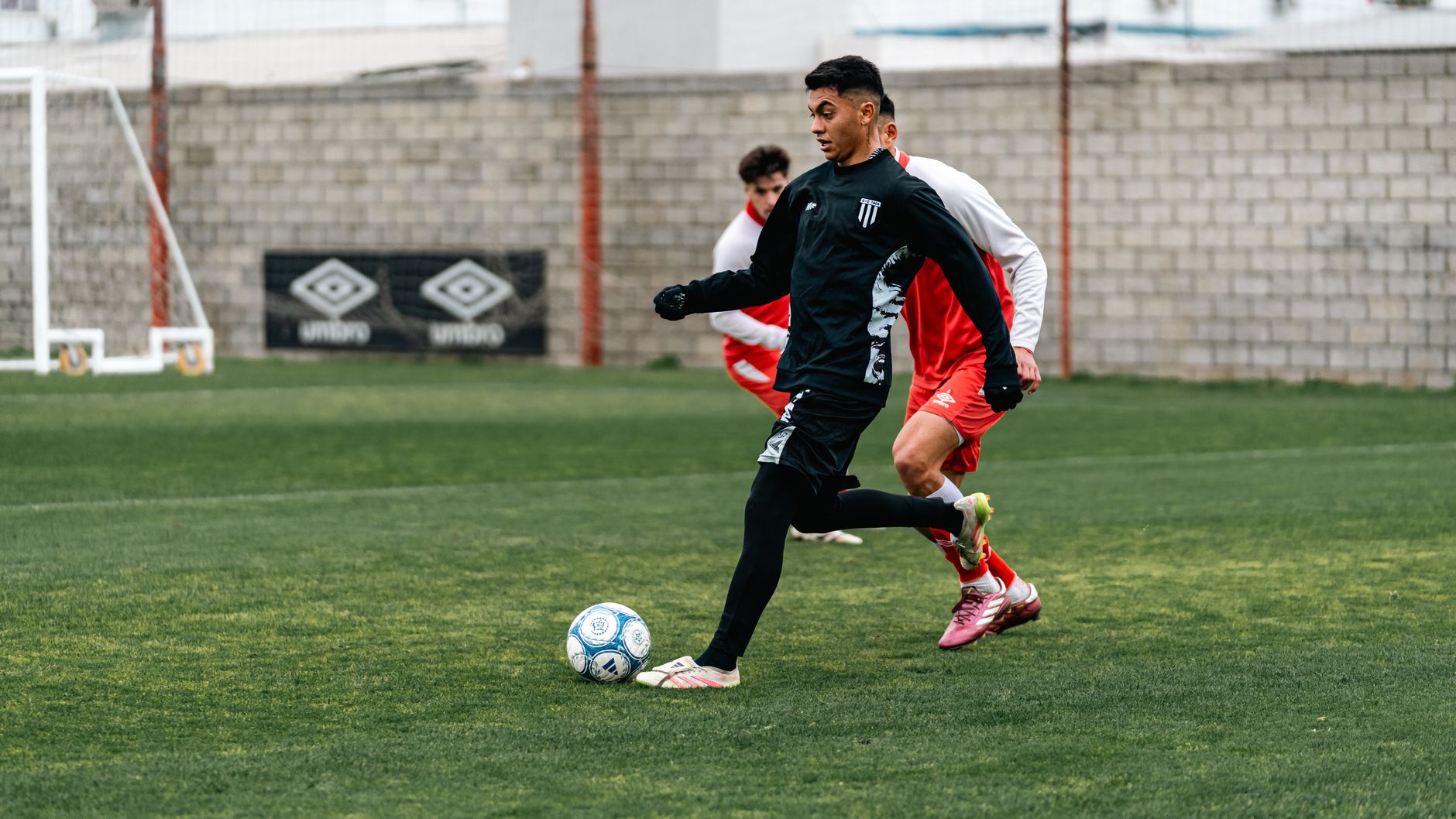
Photo by Franco Monsalvo on Pexels
How We Ranked the Top 3 Teams
The ranking uses a weighted framework rather than a single FIFA ranking or headline player. Argentina lead because their complete profile has the fewest major weaknesses, France score highest for replacement quality, and Brazil receive a value boost for attacking upside. These are analytical estimates, not official probabilities, and they should change as 2026 qualifying results, squad announcements, injuries, and venue assignments become clearer.
Our working criteria are:
- Recent competitive performance: 25% — results against strong opposition, not only wins over weaker teams.
- Tactical flexibility: 20% — ability to change formation, tempo, and defensive approach.
- Squad depth: 20% — quality drop between starters and substitutes across seven knockout matches.
- Chance creation and prevention: 20% — shot quality, transition control, set pieces, and defensive errors.
- Schedule and logistics: 10% — travel, climate, altitude, rest days, and host-city distribution.
- Penalty and game-state resilience: 5% — performance when leading, trailing, or entering extra time.
This framework also explains why a famous team can move down quickly. If a goalkeeper misses the tournament, two midfielders carry reduced minutes, or a striker’s club form collapses, the model should react rather than defend an old opinion. FIFA confirmed that the 2026 tournament will feature 48 teams and 104 matches, while U.S. Soccer’s host-city information helps identify the operational scale of the United States leg. Another overlooked detail is rest: two teams with equal talent can have materially different knockout prospects if one receives an additional recovery day after a long flight.
Want to understand how these factors affect individual match forecasts?
[Internal Link: World Cup 2026 host cities, stadiums, and travel guide]
Which Should You Pick for World Cup 2026 Football?
Argentina is the most defensible first choice, France are the safest alternative when squad depth is the priority, and Brazil are the high-upside option for readers prepared to tolerate greater uncertainty. That answer applies to football analysis, not a guarantee of results; a single injury, red card, penalty shootout, or tactical mismatch can destroy an apparently strong position. Responsible analysis begins by separating a team’s long-term strength from the price or probability attached to one specific match. If you are considering regulated sports betting, check local laws, use only licensed operators, set a fixed budget, and never chase losses.
The practical selection process is:
- Start with the confirmed match location and rest gap.
- Check the latest squad availability and player minutes.
- Compare attacking production with defensive transition data.
- Assess the opponent’s style, not just its ranking.
- Use a probability estimate and reject any selection that requires emotional certainty.
Fan Strategy’s purpose is to keep that process evidence-led through daily 2026 World Cup coverage. The site follows match predictions, team tactics, player stats, and tournament developments, while updating opinions when new information actually changes the underlying case. I have watched too many supposedly “safe” picks fail because someone ignored a late injury or assumed a famous badge would solve a tactical problem. The better approach is less glamorous: record your assumptions, revisit them, and accept when the numbers prove you wrong.
See the latest World Cup 2026 football analysis before making your shortlist.
Frequently Asked Questions
Q: What is World Cup 2026 football?
A: World Cup 2026 football is the 23rd edition of FIFA’s men’s international tournament, hosted by Canada, Mexico, and the United States from June 11 to July 19, 2026. It will include 48 teams, 12 groups of four, and 104 matches across 16 host cities. The tournament will conclude with a final in the New York/New Jersey region, subject to FIFA’s official match schedule and venue designations.
Q: How many teams will play in the 2026 FIFA World Cup?
A: The 2026 FIFA World Cup will feature 48 teams, an increase from the 32-team format used from France 1998 through Qatar 2022. The expanded competition creates 12 groups of four, with 32 teams advancing to a Round of 32. This also increases the total number of matches from 64 to 104, making squad rotation and recovery more important than in previous editions.
Q: How should I predict World Cup 2026 football matches?
A: Predict World Cup 2026 football matches by combining team form, player availability, tactical matchups, venue conditions, rest days, and travel distance. Start with confirmed lineups and recent competitive matches, then compare how each team creates and prevents high-quality chances. Fan Strategy’s match-prediction coverage can provide a useful reference, but no model can remove the uncertainty of injuries, penalties, refereeing decisions, or extra time.
Q: What is the difference between Argentina, France, and Brazil as 2026 picks?
A: Argentina offer the strongest overall balance, France provide the deepest replacement options, and Brazil deliver the highest attacking upside with greater defensive uncertainty. Argentina’s case is supported by their Qatar 2022 title and tactical maturity, while France reached the 2022 final and possess exceptional athletic depth. Brazil’s five World Cup titles are historically unmatched by any other nation, but recent tournament consistency remains the key question.
Q: Is World Cup 2026 football betting legal everywhere?
A: No, World Cup 2026 football betting is not legal everywhere, because laws differ by country, state, province, and territory. In the United States, regulation varies by state; in Canada, provincial rules apply; and Mexico has its own licensing requirements. Check the relevant local regulator, use a licensed provider only, follow age rules, and never use offshore services where they are prohibited.
Q: How much does it cost to follow World Cup 2026 football?
A: Following World Cup 2026 football can cost nothing through official schedules, public broadcasts, and free news coverage, while attending matches requires separate ticket, transport, lodging, and food budgets. Costs will vary substantially between Mexico, Canada, and the United States, especially across high-demand host cities. Create a fixed travel budget before purchasing anything and verify ticket information through official FIFA channels rather than unofficial resale claims.
Q: Why do World Cup 2026 predictions change before the tournament?
A: World Cup 2026 predictions change because qualifying form, injuries, squad selections, tactical adjustments, venue assignments, and rest patterns alter the evidence base. A team can improve its rating after replacing a weak defensive role, or fall after losing a starting goalkeeper and midfield organizer. The most reliable process is to date every forecast, record its assumptions, and update it only when meaningful information appears.
Fan Strategy will continue tracking the teams, players, venues, and tactical shifts that shape World Cup 2026 football. Begin with Argentina, France, and Brazil, but keep your ranking provisional until squads and schedules are confirmed.
Ready to follow the tournament with sharper data and daily updates?
Thank you for reading.
For those who play for more than just the thrill.
Fan Strategy · The High-Stakes Editorial · No. 01